An animated logo earns its keep in a handful of places: the first two seconds of a video, a stream overlay, a loading state, a slide that needs a full stop. In all of them it is doing one job — being recognized — and it has about a second to do it. That is why the motion should be short, calm and repeatable rather than clever.
The route most people are offered is a template: upload a flat logo, choose from a list of canned reveals, and the tool slides the picture around. It works, and it always looks like the template it came from, because the logo never becomes an object — it stays a rectangle with a picture on it.
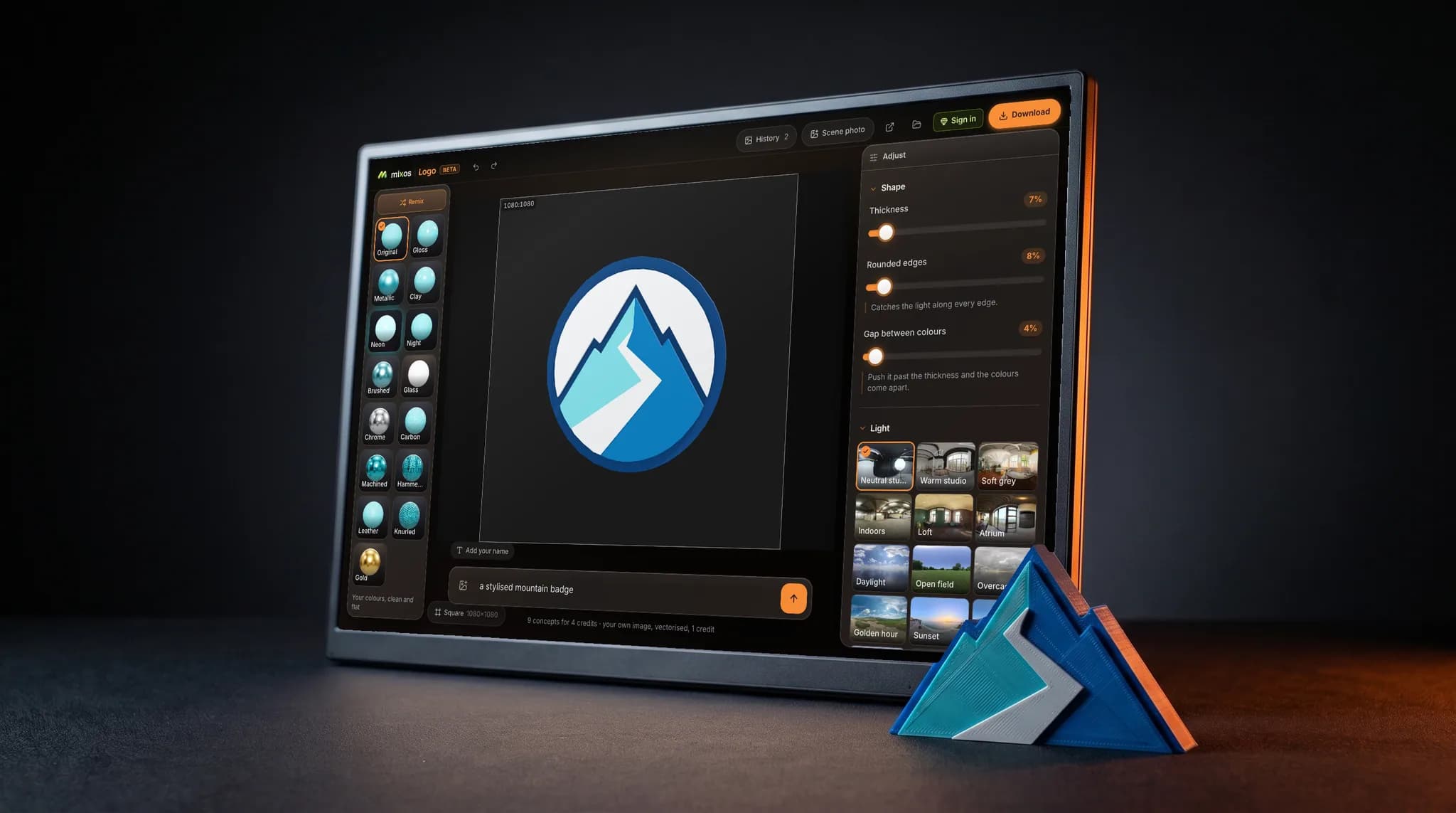
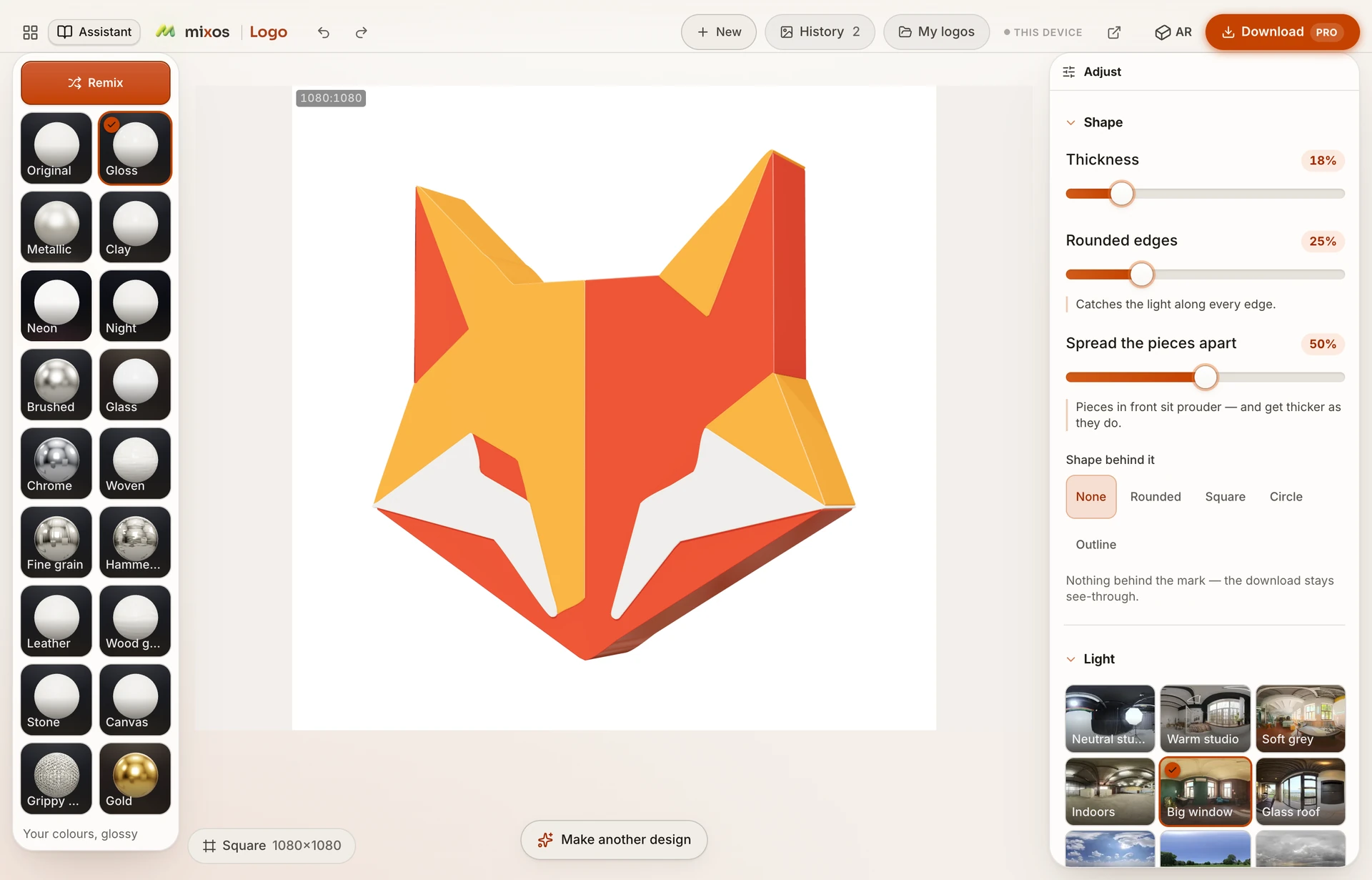
Here the mark becomes real 3D geometry before anything moves. So when it spins, you see its edges; when the light passes, the rounded edges pick it up; when it settles, it has somewhere to settle from. The motion is applied frame by frame at the point the video is written, so the clip is rendered rather than screen-captured.
The practical decisions are the background and the length. Transparent gives you something to composite; a solid background gives you something to post as-is. Most motions run four seconds, which fits the move and the rest after it; Breathe starts at fifteen because it is meant to sit quietly under something else. If you need it as a still instead, the same setup exports a picture, and if you need it as an object, it exports as a 3D model.